Program Board Spotlight: Nicola Breyer on the Realities of Building FinTech in Europe
Written
Author
Alise Munson
“A new era of collaboration to solve complex sector challenges.”
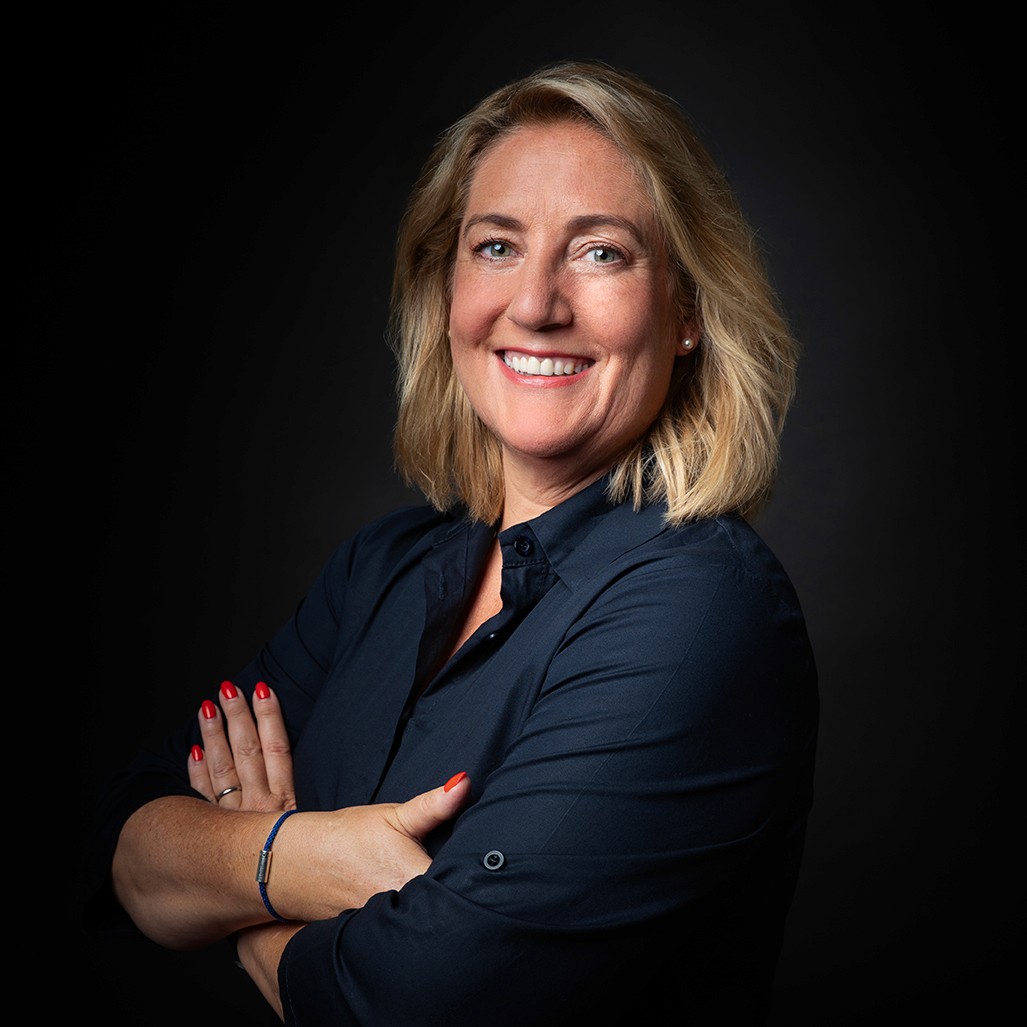
Meet Nicola Breyer. She has spent much of her career working at the intersection of finance, technology, innovation and regulation. These forces continue to shape the trajectory of Europe’s FinTech sector. She's also a Program Board Member for our TQ Accelerator: Digital Finance.
Despite the perception that FinTechs hold structural advantages over traditional banks, Nicola describes a more nuanced reality.
“Building and scaling a true fintech leader remains tough” she says. “Of course, AI allows you to build a lot of things, technology-wise, much faster and efficiently, today, as well as run compliance, reporting etc. in a more cost-effective way – a huge advantage! Having said this, a lot more needs to come together for a fintech business to grow and succeed in the long run."
Infrastructure has improved in recent years, particularly with the rise of Banking-as-a-Service providers and modular financial tooling, while you can outsource KYC, a lot of compliance tasks, and more and more advanced tech partners can come to the party,the underlying complexity remains. Regulatory fragmentation across European markets, combined with the need to establish defensible positioning and strong revenue growth, creates a challenging environment for new entrants.
“To solve a true problem, find a niche, own it, build IP, attract the right team, the right investors and then scale a business… is no mean feat,” Nicole notes. At the same time, she argues that these barriers can ultimately serve as competitive protection. “Mastering them means you can create a MOAT.”
She knows what she is talking about. Nicola’s career has been shaped inside some of the industry’s most influential companies. For example, she started her career building the first internet banks, online mortgage businesses, way back. She was also the Head of Commercial Growth, Innovation and Transformation at PayPal and also CEO and Managing Director at Qwist. Now serving as senior advisor to banks and board member to start-ups, as well as strategic advisor to industry associations, like FRIDA, she is part of the Program Board for the TQ Accelerator: Digital Finance.
Banks in Transition
Nicola also challenges the assumption that incumbents are lagging behind. In her view, some banks have already undergone a fundamental shift.
“Banks have long become technology companies,” she says. The primary constraint on innovation is only partially technical. Instead, she points to organizational structures and business models as truly limiting factors.
Even so, she expects continued progress in areas such as automation, fraud prevention, data utilization, personalisation and artificial intelligence. Strong balance sheets and financial and people resources position banks to remain relevant players in the evolving ecosystem. Banks may be second movers, and of course, some traditional players may need to find a new core proposition and business model, but their financial performance is currently strong and they are investing for the future.
Nicola anticipates renewed collaboration between incumbents and startups.
“I am hoping for a renewed wave of bank/FinTech partnerships to emerge, particularly in the field of customer solutions, contextual and agentic AI and data, as fintechs continue to excel at the customer interface and banks keep re-working their core,” she says.
Emerging Opportunities
Looking ahead, Nicola identifies several areas within European FinTech that remain underdeveloped relative to their potential. Among them are stablecoins, tokenised assets, and regulated, AI-powered, financial advice, particularly within the mass-affluent segment. The latter requires a different approach to data, especially in the wealth and insurance segment. Data infrastructure is another area for growth.
Each of these categories reflects increasing convergence between technological innovation and regulatory frameworks, an area where Europe has historically taken a more structured approach than other markets.
Underestimating Regulation
For early-stage founders, regulation remains one of the most underestimated challenges.
“The regulatory demands have a huge impact on Tech, Talent, Product, Ops and the cost base,” Nicola says.
Importantly, these demands extend beyond a company’s own licensing requirements. Partnerships with regulated institutions, including banks and insurers, introduce additional layers of compliance that can significantly influence product development and operational complexity.
AI is both a blessing and could at the same time be a hidden risk. If you develop a product for banking customers, heavily based on AI, but are not aware of the banks’ governance, guardrails and AI ethics and readiness, it could cost your business. If you do not engage in lobbying for sensible, new regulations in your field and make your voice heard, it will be created without you. This engagement is hard work, but well worth it.
Founder Mindset
When collaborating with founders, Nicole places less emphasis on visibility and more on vision and execution capability. She highlights entrepreneurs such as Robin Binder (NAO) and Lukas Zörner (Integral), Hanna Bachmann (Hepster), as well as André Rabenstein (WealthAPI) as examples of a disciplined approach to company building.
“They are laser focused… building lasting value and exceeding expectations, and they are very clear on solving a specific problem,” she says, adding that humility and kindness remain defining characteristics. “They have never let success get to them, have an incredible learning mindset and surround themselves with a great team. They are looking to build long-lasting companies that contribute value to all stakeholders and are here to stay, not to be sold. A personal role model is Miriam Wohlfarth, another Program Board Member, who is a rare and well-known female founder in our world who has built and scaled fintechs from idea to a significant size and is highly active in promoting entrepreneurship in Germany and beyond."
Lessons from Experience
Reflecting on her own experience in digital finance, Nicole points to a set of recurring lessons that have surfaced over time.
“What’s in the best interest of the business is not always in the interest of financial investors,” she says, underscoring the tensions that can emerge as companies scale.
She also notes the operational reality of building in a regulated environment: “It always takes longer and is more complicated than you would have thought… but very much worthwhile.”
Long-Term Perspective
As the European FinTech ecosystem continues to mature, Nicola’s perspective aligns with a broader industry shift away from speed as the primary metric of success, and toward resilience, compliance, and long-term value creation.
Within the TQ Accelerator: Digital Finance, that perspective translates into a more grounded form of support for founders. It’s one that reflects not just the opportunities in FinTech, but also the structural challenges that define it.
“The TQ Accelerator has evolved into a powerful program for founders,” Nicola says, pointing to its role in connecting financial institutions, investors, and entrepreneurs. “We truly tailor each program to the participants' needs.”
She has been part of the Accelerator for the first two iterations and is returning for the third, which began on 11 May in Frankfurt.
That adaptability, she suggests, is critical in a sector where challenges rarely follow a standard playbook. Much of her work with founders centers on core operational questions, including product-market fit to fundraising and scaling in an increasingly AI-driven environment. In some cases, those engagements extend beyond the program itself.
Nicola continues to advise selected teams after completion, reflecting a longer-term commitment to company building. In fact, she is a Board Advisor for the French startup Jared and met the founder, Alexi Perrino, during the 2025 Accelerator.
More reading (and listening):
· Das Investment: „Die Branche könnte längst personalisierte Angebote machen statt reinem Produktvertrieb“
· Payment & Banking: Hat Revolut gerade den Nokia-Moment für Banken geschaffen?
· Das Investment: Diese vier Frauen gestalten die Zukunft der Finanzbranche
· Podcast – KPMG Financial Sevices Hub: Wie nutzen Banken und Versicherungen die Chancen von FiDA? #50