Program Board Spotlight: Miriam Wohlfarth on Building FinTechs That Last
Written
Author
Alise Munson
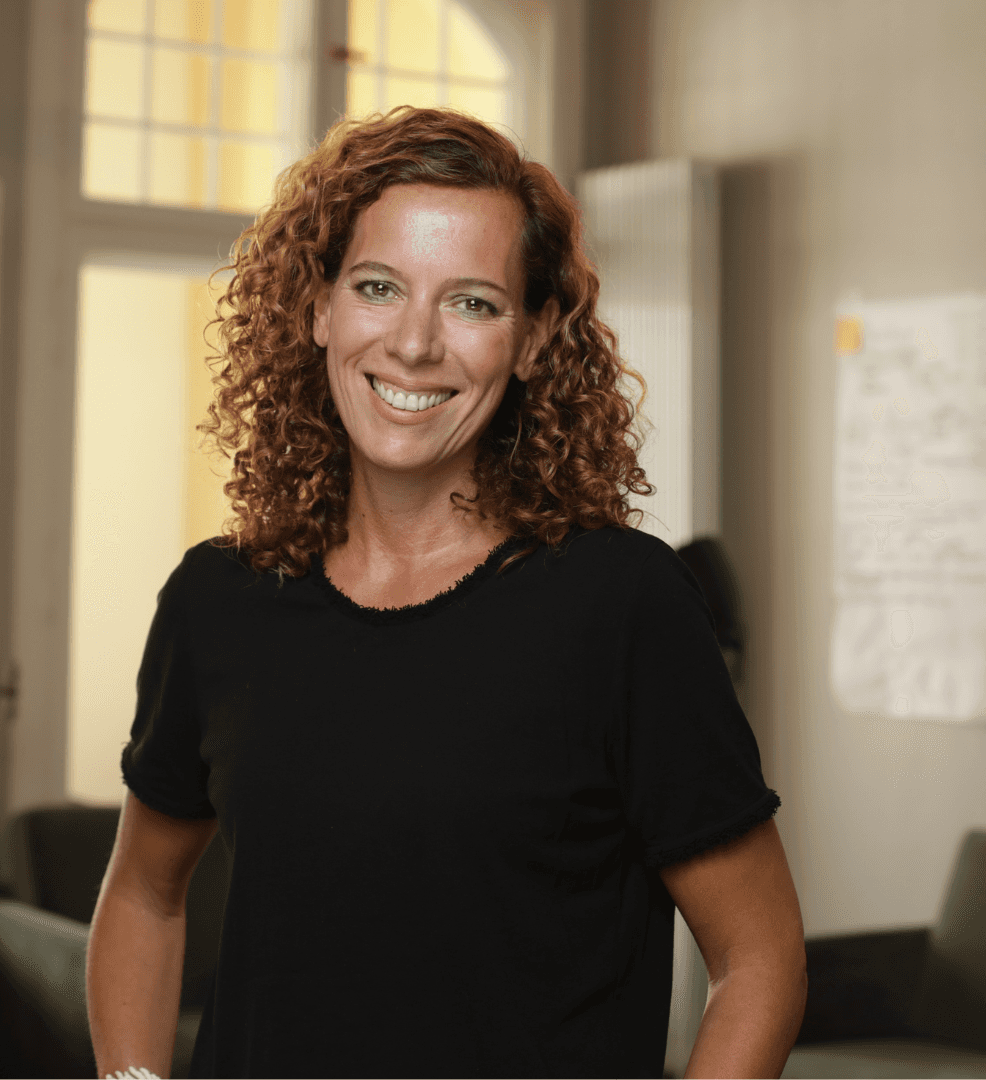
As a Program Board Member of the TQ Accelerator: Digital Finance, Miriam Wohlfarth brings one of the most accomplished track records in European FinTech.
Miriam is a serial entrepreneur, investor, and one of Germany’s most influential voices in fintech and digital innovation. She founded Ratepay in 2009 and led the company as Managing Director until 2021. Under her leadership, Ratepay achieved unicorn status, became sustainably profitable, and was acquired by Advent International and Bain Capital before later joining Nexi Group.
In 2020, she co-founded Banxware, a FinTech company providing embedded lending solutions for small and medium-sized businesses. As Co-CEO, she has helped build Banxware into one of Germany’s leading embedded finance providers, raising more than €35 million in venture capital and growing the company to a team of over 60 employees.
Beyond her entrepreneurial work, Miriam is co-founder of Payment & Banking, shareholder of STARTUP TEENS, Supervisory Board Member at freenet AG, member of the Investment Committee at TX Ventures, and serves on the extended board of the German Startups Association.
Miriam has received numerous accolades, including repeatedly being named among the most influential women in German business and was recognized by Handelsblatt as one of Germany’s "People of the Year."
Drawing on more than 20 years of experience in payments, fintech, and entrepreneurship, Miriam shares her perspectives on digital finance, embedded lending, innovation, leadership, and the future of the European startup ecosystem.
What’s one common misconception about building a FinTech in Germany or Europe?
That regulation is the biggest challenge.
“Regulation is complex. At the same time, it is clear and structured. The bigger challenge is distribution, trust, and long sales cycles.”
Many founders underestimate how difficult it is to gain real traction, particularly in conservative markets where trust must be earned over time.
For Miriam, success in European FinTech is less about overcoming regulation and more about understanding the market, building credibility, and executing consistently.
How important is regulation: barrier, opportunity, or both?
It is both, but much more of an opportunity than many founders realize.
Miriam strongly encourages FinTech founders to invest in regulatory expertise from the very beginning.
“One of my strongest recommendations is to bring legal expertise in early. Ideally, someone with deep regulatory understanding as part of the team.”
Without that expertise, teams often spend valuable time debating what might be permitted. With the right guidance, founders gain clarity on where the boundaries are and can move forward with confidence.
“That clarity creates speed. It creates confidence. It is a real advantage.”
Rather than slowing innovation, regulation can become a strategic asset when approached proactively.
How is the role of banks evolving in the next three to five years especially in relation to startups?
Banks are moving away from being the center of the financial relationship.
Customers increasingly expect financial services to be embedded into the products and platforms they already use rather than accessed through standalone banking channels.
“Customers do not actively seek out banks anymore. They expect financial services where they already are such as inside platforms, inside software, inside workflows.”
That does not diminish the importance of banks. Miriam sees them continuing to play a critical role by providing licenses, capital, and trust, while startups contribute speed, technology, and customer-centric experiences.
“The future is collaboration inside ecosystems.”
In this new landscape, relevance will no longer be determined by visibility but by how seamlessly financial services fit into real customer journeys.
What role will embedded finance play across non-financial industries in the coming years?
Embedded finance will fundamentally change how financial services are distributed.
According to Miriam, the most important shift happening in FinTech is not product innovation itself but the transformation of distribution models.
“The biggest game-changer in FinTech is not the product. It is the distribution model.”
Customers are no longer willing to leave the platforms they already use to access financial services. Instead, financial products must be delivered within those existing experiences.
“Financial services have to come to them.”
Advances in data and technology make this possible by enabling more relevant and contextual products tailored to individual situations rather than broad customer segments.
“We are moving from banking relationships to platform ecosystems.”
And in Miriam’s view, the industry is still only at the beginning of that transformation.
Where do you see the biggest untapped opportunities in the European FinTech ecosystem?
At the intersection of distribution, data, and product fit.
Despite significant innovation over the past decade, many financial services still fail to reach customers in ways that feel natural and relevant within their daily workflows.
“It is not only about embedding finance. It is about building the right product.”
The future belongs to solutions that move beyond one-size-fits-all offerings and instead leverage data to create highly contextual experiences.
“Those who understand their customers deeply and combine that with strong distribution will unlock massive value.”
Miriam sees particularly strong opportunities in serving small and medium-sized businesses, a segment that remains underserved across much of Europe.
What do early-stage FinTech teams consistently underestimate?
Sales and distribution.
Many founders focus heavily on building products and technology while underestimating the challenge of bringing those products to market.
“Many startups fail not because the product is bad. They fail because they cannot sell it.”
For Miriam, founder-led sales remains one of the most important ingredients of early-stage success.
“You need a product. You need technology. You also need the ability to bring it to market.”
Without strong sales capabilities, even the best solutions struggle to gain momentum.
“Success comes from combining product, trust, and distribution.”
Which technologies are truly transformative and which are overhyped?
Technology only matters when it solves a real problem.
Miriam believes artificial intelligence is already creating significant value across financial services, particularly in areas such as risk assessment, fraud detection, and operational efficiency.
“AI is clearly transformative.”
However, she cautions that AI is only as effective as the data that powers it.
“If data is fragmented or poorly structured, results will not be meaningful.”
She also sees open finance continuing to unlock new ecosystem opportunities over time. At the same time, technologies without clear use cases often receive more attention than they deserve.
“Technology alone is never the differentiator. Execution is.”
Which startup or founder mindset inspires you right now?
Ambition combined with realism.
The founders Miriam admires most are not chasing hype—they are focused on execution.
“The strongest founders understand their market, regulation, and customers deeply.”
They take a long-term view, remain disciplined, and continue moving forward even when progress is slower than expected.
“They think long term. They stay disciplined. They keep going.”
How should founders approach hiring in such a regulated and specialized industry?
Start with clarity.
Before hiring, founders need a clear understanding of what they are building and which capabilities are required to get there.
“The clearer the goal, the better the hiring decisions.”
Miriam advises founders to build complementary teams rather than hiring people with identical strengths and perspectives.
Legal, compliance, and risk expertise should be introduced early, while cultural fit remains equally important.
“People need to work well together. They need to challenge each other in the right way.”
The strongest teams combine diverse expertise with a shared commitment to the mission.
What’s one hard lesson you’ve learned working in digital finance that founders should know early?
Everything takes longer than you think.
Whether it is regulation, partnerships, customer adoption, or trust-building, progress in FinTech rarely happens as quickly as founders expect.
“You need resilience to keep going.”
At the same time, persistence alone is not enough. Founders also need the discipline to recognize when something is not working and make necessary adjustments.
“Persistence and clarity need to go together.”
Looking back, is there a story or insight from your journey that stands out?
For Miriam, one lesson has remained consistent throughout her entrepreneurial journey.
Building FinTech takes time.
Products evolve, markets change, and strategies adapt. What ultimately determines success is the ability to stay focused and keep improving.
“You cannot do everything at once.”
Founders need the courage to question their assumptions, continue innovating, and surround themselves with people whose strengths complement their own.
“A strong team makes the difference.”
Because in the end, sustainable progress is rarely the result of a single breakthrough, it is the outcome of persistence, focus, and continuous execution.