Program Board Spotlight: Dirk Rudolf on Building Durable FinTech Infrastructure in Europe

Written
Author
Alise Munson
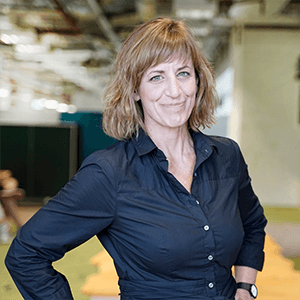
As a Program Board Member of the TQ Accelerator: Digital Finance, Dirk Rudolf brings a rare combination of founder, operator, and investor experience to the table. Before becoming Founding Partner at Wunderland Capital, a European venture capital Fund of Funds focused on backing leading early-stage B2B technology investors, Dirk helped shape some of Europe’s most influential FinTech success stories.
As Chief Information Officer at SOFORT AG, he played a key role in building one of Europe’s leading FinTech companies, which was later acquired by Klarna. He then founded and led FinTecSystems as Co-CEO, growing the company into a leading financial infrastructure provider before its acquisition by Tink in 2021.
Drawing on more than two decades in digital finance, Dirk shares his perspective on regulation, embedded finance, and the realities of building FinTech companies in Europe.
What’s one common misconception about building a FinTech in Germany or Europe?
That regulation is not the main problem.
In reality, regulation is often the predictable part. What’s much harder is distribution and building trust.
“Winning in FinTech is not about building a better product; it’s about becoming part of critical financial workflows.” Achieving that requires time, credibility, and often strong partnerships with established financial institutions.
For founders, the challenge is less about navigating regulation and more about earning a place within the systems and processes customers already rely on.
How important is regulation: barrier, opportunity, or both?
Clearly both, but for the right teams, it’s often more opportunity than barrier.
Regulation inevitably introduces complexity, but it can also create significant competitive advantages. According to Dirk, regulatory changes have repeatedly opened new opportunities for innovators who were prepared to act early.
“At SOFORT, and later at FinTecSystems, we benefited from regulatory shifts like PSD2. They don’t just open markets, they reshape them.”
Rather than viewing regulation as an obstacle, successful FinTech founders learn how to build alongside it. Those who understand upcoming regulatory developments can position themselves ahead of the market and create solutions that are difficult for competitors to replicate.
What role will embedded finance play across non-financial industries in the coming years?
Embedded finance will become the default.
As financial services become increasingly integrated into digital experiences, users will interact less with standalone financial products and more with financial functionality embedded directly into the platforms they already use.
“Financial services will disappear as standalone products and become features inside other experiences—mobility, e-commerce, and B2B platforms.”
While the first wave of embedded finance focused heavily on consumer applications, Dirk expects the next phase to be driven by infrastructure and B2B use cases. The technology will become less visible to end users but more deeply integrated into the systems powering entire industries.
What do early-stage FinTech teams consistently underestimate?
Time-to-market and integration complexity.
Many founders assume that building the product is the most challenging part of the journey. In practice, the bigger hurdles often emerge after development.
“It’s rarely the core product that slows you down; it’s onboarding partners, integrating into existing systems, and navigating compliance.”
FinTech companies often plan and operate like software businesses, but the reality is closer to infrastructure development. Success depends on coordination across multiple stakeholders, technical integrations, and regulatory requirements—all of which take longer than most teams initially expect.
What’s one hard lesson you’ve learned in digital finance that founders should know early?
Signing is not closing.
Throughout his career, Dirk has seen countless examples where agreements appeared to mark the finish line but were actually just the beginning.
“At SOFORT and later at FinTecSystems, we learned that agreements, whether with partners or in M&A, are just the start. Execution is where most things break.”
The lesson is simple but critical: success depends not on getting a deal signed, but on what happens afterward. In FinTech, implementation, alignment, and execution often determine whether opportunities translate into long-term value.
“Everything takes longer than expected, but when it works, it tends to be very durable.”
Looking back, is there a story or insight from your journey that stands out?
One of Dirk’s most memorable lessons comes from the early days of SOFORT.
“When SOFORT started in 2004, there was no PSD2, no open banking, just a very simple idea of enabling online payments directly from bank accounts.”
At the time, the concept faced significant resistance from traditional banks. Yet years later, regulatory developments such as PSD2 helped validate many of the principles behind the company’s approach.
For Dirk, the experience highlights an important truth for founders building financial infrastructure today:
“If you’re solving a real problem, timing may be uncertain—but the direction is often right.”
Meet Dirk on 16 June at TQ
You can hear more of Dirk’s insights on 16 June at 17:00 at TechQuartier during his Fireside Chat.
>> Register here.