Community Member of the Month: VANOZZA

Written
Author
Triantafillia Pepe
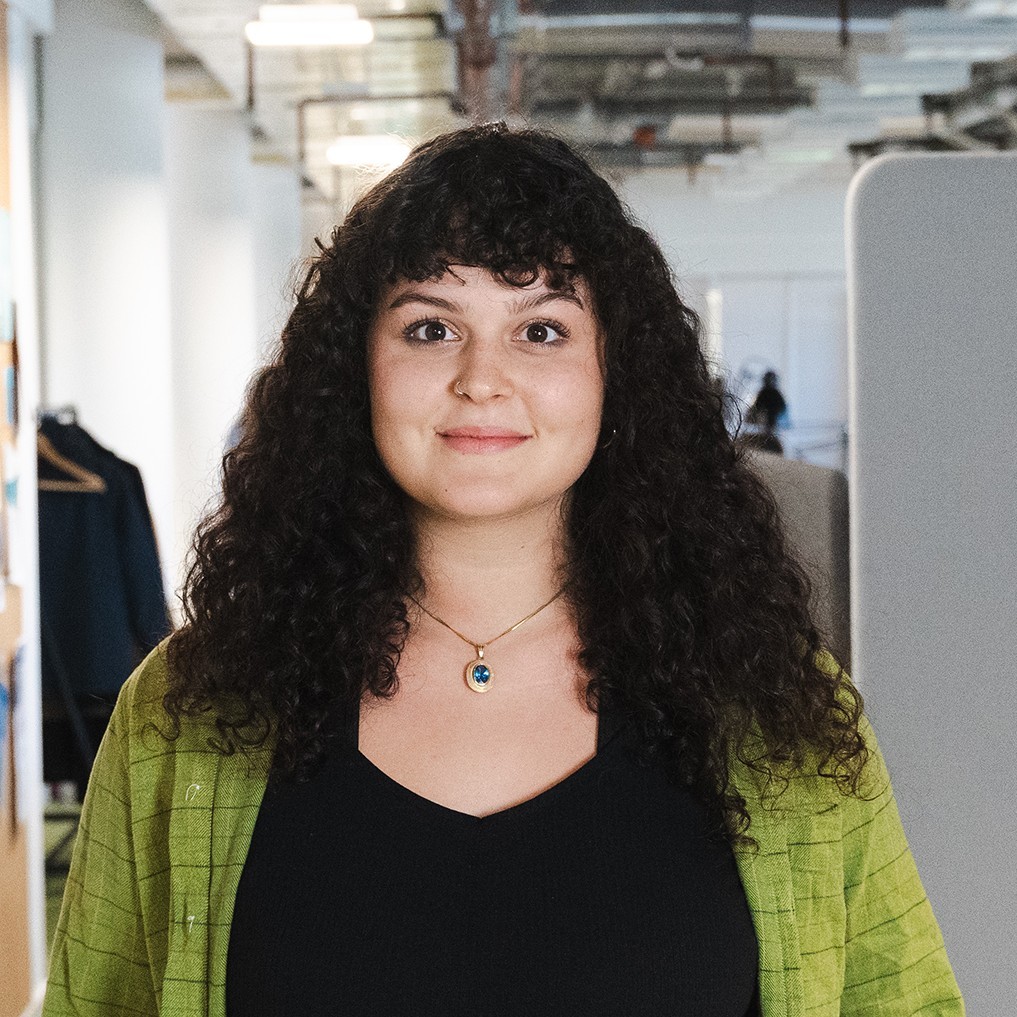
Say cheese! Or maybe if you’re one of the co-founders of VANOZZA you’d say delicious tasting vegan cheese alternatives. No matter how you slice it, this Hamburg-based AgriFood startup is changing the vegan (and non-vegan) world with their growing assortment of cheeses from Mozzarella to Brie to a Chili Cheese Sauce. We originally met Nico Hansen and Marie Chiara Tauber in our Growth Alliance Accelerator in 2025. Since then, we’ve seen their products on the shelves of Rewe, as well as local vegetarian/vegan markets.
Here’s your chance to learn more about this duo.
Getting to know the founders
Nico, VANOZZA started with your own search for the perfect vegan cheese for your pizzeria. At what point did you realize that this could (and should) become your own company?
I was living in a quiet residential neighborhood in Hamburg, and when a space in the local cultural center became available, I started a vegan pizzeria there. First as a project, later as a proper restaurant. It wasn't a calculated location of choice; it was simply where I was, and where an opportunity opened. But that context shaped everything. I wasn't in a trendy district where a vegan concept almost sells itself. The pizza had to be genuinely good, good enough that people would come despite it being vegan. The cheese alternatives available in 2015 made that impossible. They didn't melt properly, the taste was off, and the texture gave everything away. Out of that frustration and with a recipe idea from my aunt who was living in Italy at the time, I started experimenting myself. That recipe eventually became the foundation for VANOZZA even though we reworked it significantly before it became the product it is today.
What does being a founder mean to each of you personally, and how do your personalities complement each other when it comes to running VANOZZA?
For both of us, the honest answer is freedom. The ability to try things for the first time, to figure out what you actually enjoy, to shape your work and your life yourself ... that's a real privilege we don't take lightly. On the practical side, we're both fairly good at organizing and prioritizing, so there wasn't some natural, personality-driven split from the start. What has emerged over time is that Nico gravitates more toward sales, and I, Marie, toward building processes and handling communications and public-facing work.
From the idea to the product
What is the hardest part about making a plant-based cheese seem like dairy cheese?
It depends entirely on the product. With Mozzarella, the central challenge was melting behavior. That’s what matters most in a kitchen/on a pizza, and it's what the early alternatives got wrong. With the Brie, the question was whether the fermentation would actually work and whether the mold culture would deliver an authentic result. We import the Penicillium camemberti from France for exactly that reason.
More generally, we always start by understanding what makes the original worth replicating.
First, the application: how is it actually used?
Second, the flavor: for the Old Italian, we worked with a wine sommelier and discovered that pineapple contributes significantly to the authentic taste profile, something you'd never guess intuitively.
Third, the nutritional values: our Mozzarella has the same fat content as its dairy counterpart.
And fourth, the production method: we use techniques from traditional cheesemaking: fermentation, pasteurization, ageing. That's not marketing language; it's how the products are actually made.
Your products range from Mozzarella and Feta alternatives to traditionally matured Brie and a Parmesan-style product. How do you approach developing a new product?
We start with cheeses that we genuinely love ourselves. Beyond that, we look at where trends are moving and where our customers have an unmet need. But the real filter is quality. We only develop something if we're confident that we can do it better than what currently exists. That's also why we don't have sliced cheese in our range. We'd love to, but we haven't managed to reach a quality we're happy with yet. Most recently we've been working on a Stracciatella, and blue cheese is something we're genuinely excited about bringing retail to a level that would do it justice.
You describe VANOZZA as "cheese alternatives of the second generation." What do you think distinguishes this second generation from the first vegan cheese products?
The first generation solved one problem: making something technically vegan that could stand in for cheese on a label. What it often didn't solve was the eating experience. Products were heavily processed, with long ingredient lists, and the taste and texture disappointed anyone who wasn't already committed. The second generation takes the original seriously as a benchmark. That means real fermentation, cleaner formulations, and a genuine commitment to sensory quality. We want people who love cheese to reach our products. That requires a different level of ambition.
From product to market
VANOZZA started by supplying gastronomy and has since expanded into supermarkets such as REWE and selected EDEKA and HIT stores. What has surprised you most about the transition from B2B to retail?
Foodservice felt natural to us, since it's where we come from. We understood the needs of a professional kitchen intuitively, and having actually run a vegan pizzeria meant we knew that world from the inside. Retail was a completely new territory. The sales channels work differently, the lead times are different, and what actually performs on the shelf is a different question entirely. Our Mozzarella, for example, comes in a casing rather than the square, brine-filled format most people expect. In a professional kitchen, nobody cares. On a supermarket shelf, it can mean people don't immediately recognize it. We've stayed with our approach deliberately, and we're lucky to have customers who are genuinely curious and actively looking for new products. That enthusiasm means a lot.
Who do you see as your core customers today? Mainly vegans? Or flexitarians and cheese lovers who simply want a better alternative?
Vegans are absolutely our primary audience, especially in retail. And that's personal for us too. Everyone on the team is vegan, and we're genuinely ethically motivated. But we have to be honest, in Germany, that's still a relatively small group. Our ambition goes further. We want to make cheese for cheese lovers. That's precisely why quality is non-negotiable for us. If the product is good enough, it reaches flexitarians, it reaches people who are curious, it reaches anyone who simply wants to eat well. That's the much larger group, and that's who we're ultimately building for.
Changing perceptions around plant-based food
Plant-based food alternatives often face criticism, particularly from people who don't follow a vegan or plant-based diet. How do you deal with people saying, "That's not real cheese"?
We don't really argue about it. What we'd push back on is the assumption that it therefore can't be worth eating. The better response is just to let people try it. Most of the skepticism dissolves quickly when the texture is right, and the taste delivers. We’d rather put energy into product quality than into winning debates; you can’t really win.
Sustainability & Impact
You've measured the environmental impact of your "No Sheep Greek" Feta alternative and found 50.17% lower CO2 emissions and 93.1% lower water consumption compared with conventional Feta. Why was it important for you to measure this?
Claiming that plant-based is better for the planet without evidence isn't good enough. Almost every alternative food brand makes that claim, and without numbers behind it, it's just marketing. We wanted to know whether it was actually true for our specific product and production setup, and if it was, to be able to say so with something concrete and certified behind it. The water-use numbers especially surprised us. Sheep farming is far more water-intensive than most people realize. Having that data gives us and our customers something solid to stand on.
What is one sustainability challenge within the food industry that you think doesn't get enough attention?
True cost pricing. Conventional animal products are still heavily subsidized, and their real environmental costs — emissions, land use, water — aren't reflected in what people pay at the checkout. That creates a structurally uneven playing field for quality-driven alternatives. It's not that the product is worse or more expensive to make well; it's that the reference price it's being compared against is distorted. Until those changes are made, consumers are making purchasing decisions based on a comparison that doesn't reflect reality.
Ending on a personal note
You already have quite a few serving suggestions on your website, but what is your personal favorite VANOZZA product, and what do you like to combine it with?
Nico: On pizza, the Mozzarella. Always. That's where this whole thing started, and it hasn't lost its place. Beyond that, the Brie has been ranking very high lately, both the natural version and the green pepper one. And my current guilty pleasure is actually our Chili Cheese Sauce, which is our first sauce, and genuinely dangerous to have in the fridge.
Marie: I can't eat pasta without the Old Italian anymore. The Mozzarella I love equally. And on the Brie front, Nico and I are completely aligned. What's quietly working its way up the ranking right now is our almond-based Frischcreme. The natural fermentation gives it a lovely gentle acidity that makes it feel very alive. That one might end up at the top.
If you are interested in joining our startup community please fill out this community application form.